

Continuing education in healthcare is often associated with one thing: earning the CEUs or continuing education credits required to maintain a license or certification. Those requirements matter, but they represent only one part of what it means to keep learning throughout a healthcare career.
Healthcare changes constantly. New technology enters the workplace, evidence and best practices evolve, and professionals encounter new patient populations, procedures, and challenges. Continuing education in healthcare can help professionals keep pace with those changes while also developing skills, exploring new interests, and deciding where they want their careers to go next.
And not all of that learning happens in a formal course.
CEUs Matter, but Learning Doesn’t Stop There
For many healthcare professionals, formal continuing education is an important part of maintaining professional credentials. Exact requirements vary by profession, license, certification, and location, so healthcare professionals should always verify current requirements with the appropriate licensing board or credentialing organization.
But completing required education and actively developing your career aren’t necessarily the same thing.
A course may satisfy a requirement. Professional growth happens when you take what you’re learning and connect it to the work you’re doing, the questions you’re asking, and the skills you want to develop.
That’s where continuing education becomes much bigger than checking a box.
Conferences Can Expand the Way You Think
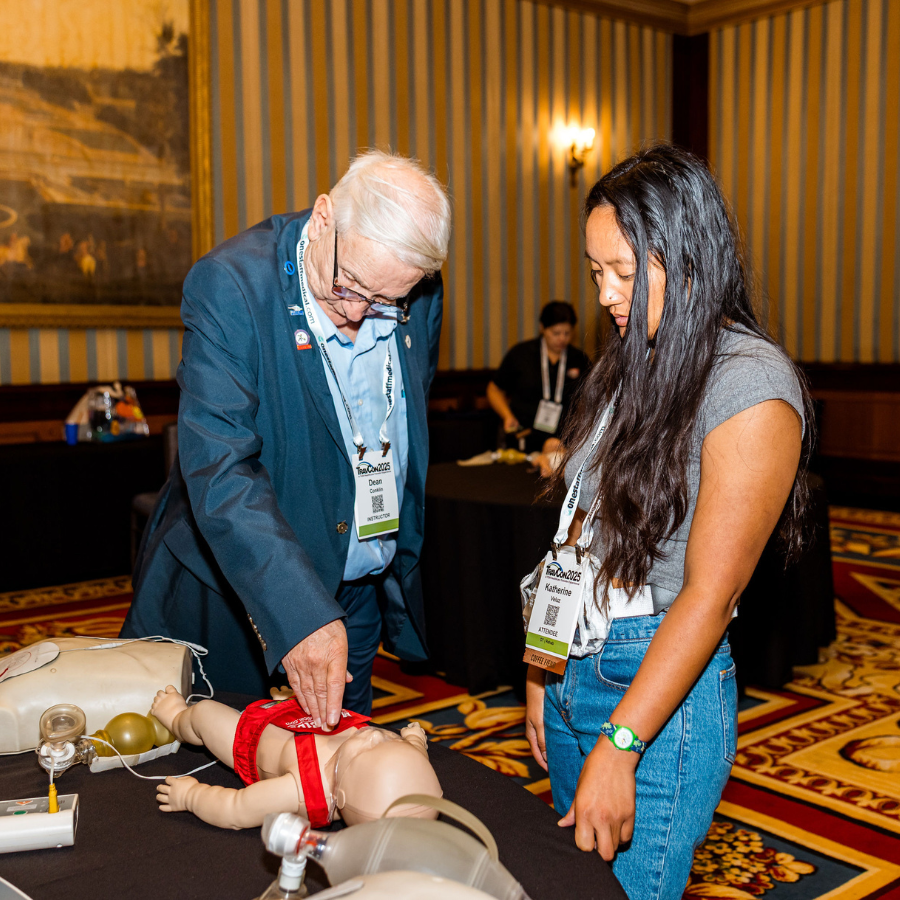
Healthcare conferences can offer something that’s difficult to replicate through an online course alone: exposure to different perspectives at the same time.
You may attend a session about a clinical topic, hear a speaker discuss an industry challenge, and then learn just as much from a conversation with another healthcare professional afterward. Those conversations can introduce you to specialties, career paths, workplace approaches, and professional experiences you haven’t encountered in your own facility.
The most valuable takeaway isn’t always something you can immediately add to a resume. Sometimes it’s a question you hadn’t thought to ask or an idea that changes how you approach your work.
Professional Organizations Can Keep You Connected to Your Field
Professional and specialty organizations can be another valuable source of ongoing education.
Depending on your profession, these organizations may provide educational resources, conferences, webinars, publications, professional updates, networking opportunities, or information about changes affecting the specialty.
They can also help healthcare professionals stay connected to developments outside their individual workplaces. When you spend most of your time within one facility or health system, it’s easy for that environment to become your entire frame of reference.
Connecting with a broader professional community can help expand it.
Certifications Can Help You Go Deeper
If you’ve developed a strong interest in a particular specialty or skill area, a professional certification may be worth exploring.
Certification requirements vary widely, so research the credential carefully before pursuing it. Look at the organization offering it, eligibility requirements, maintenance requirements, and whether the credential is recognized or valued within the type of work you want to do.
The goal shouldn’t simply be adding letters after your name. A useful certification should support the expertise you’re trying to develop or the career direction you’re considering.
Webinars and Online Education Make Learning More Accessible
Professional development doesn’t always require travel or a major financial investment.
Webinars, virtual conferences, online courses, recorded educational sessions, and other digital resources can make it easier to continue learning around a healthcare schedule. This can be especially useful for travelers or professionals working nights, weekends, or changing schedules.
Quality matters, though. Look for credible sources and consider who created the educational content, what evidence supports it, and whether it is appropriate for your profession and scope of practice.
Convenient education is most useful when it’s also reliable.
Learn From the People Around You
Some of the most valuable professional education in healthcare happens through other people.
A colleague may have years of experience in a specialty you’re curious about. A traveler may have worked in several different facility types and seen approaches you’ve never encountered. Someone from another discipline may understand part of the patient experience or healthcare system that you rarely see.
Ask questions.
Not because you expect someone else to teach you everything, but because professional curiosity can turn everyday interactions into opportunities to learn.
Healthcare brings together people with very different training and experiences. Taking advantage of that collective knowledge can broaden your own.
Find a Mentor, or Become One
Mentorship can make continuing education more personal.
A mentor can help you think through career decisions, identify skills to strengthen, understand a specialty, or see possibilities you may not have considered. They can also provide context that formal education sometimes can’t.
Mentorship doesn’t have to be a formal arrangement, either. It can develop naturally through professional relationships, conferences, assignments, workplaces, or specialty organizations.
And if you’ve been in healthcare for a while, you may already have knowledge someone else needs. Teaching and mentoring can strengthen your own understanding while helping another professional grow.
Working in New Environments Can Be Educational Too
Travel healthcare professionals experience a form of continuing education simply by working in different environments.
Every facility has its own systems, workflows, team structures, patient populations, technology, and expectations. Moving between them requires travelers to adapt while continuing to work within their professional scope and the facility’s policies.
That exposure can broaden your understanding of how healthcare is delivered.
It can also show you that the way one organization does something isn’t necessarily the only way it can be done.
Teaching Can Strengthen Your Own Knowledge
One of the best ways to discover how well you understand something is to try explaining it to someone else.
Precepting, mentoring, helping onboard a new team member, presenting information to colleagues, or contributing to professional education can force you to organize what you know and recognize where your own knowledge has gaps.
Teaching doesn’t require knowing everything.
It requires being willing to share what you know accurately, acknowledge what you don’t know, and continue learning yourself.
Reflect on What Your Work Is Teaching You
Not every learning opportunity comes with a certificate.
Difficult shifts, unfamiliar situations, challenging assignments, mistakes, and conversations with coworkers can all teach you something if you take time to reflect on them.
Ask yourself what a particular experience showed you.
Did you identify a knowledge gap?
Did you handle something differently than you would have a year ago?
Did another healthcare professional approach a problem in a way you want to remember?
Did an assignment expose you to an area you’d like to understand better?
Reflection turns experience into something you can intentionally build on.
Make Continuing Education Intentional
With so many ways to learn, it’s easy to collect random courses, webinars, and resources without having a clear reason for choosing them.
Instead, start with a question, skill, or goal.
Maybe there’s a clinical area where you’d like more confidence. Perhaps you’re considering a specialty and want to learn more before pursuing it. You might want to become a stronger mentor, understand an industry change, or explore a future career direction.
Once you know what you’re trying to learn, you can choose the educational resource that actually supports it.
That could be a course.
It could be a conference session.
It could be a mentor.
It could be a certification.
Or it could simply be a conversation with someone who knows something you don’t.
Continuing Education in Healthcare Is a Career-Long Process
Healthcare professionals never reach a point when there’s nothing left to learn. The field changes, workplaces change, and your own career interests can change along with them.
Formal continuing education will remain important for many professionals, particularly when it is connected to licensing or certification requirements. But the broader habit of continuing to learn can do something equally valuable: help you remain curious, adaptable, and prepared for whatever direction your healthcare career takes next.
CEUs may be part of continuing education in healthcare.
They don’t have to be the end of it.
Keep Learning With the TravCon Community
TravCon brings healthcare travelers together to learn from experts, share experiences, ask questions, and discover what other professionals across the industry are seeing.
Keep building on what you’ve learned, stay connected to the people who challenge you to grow, and bring that curiosity with you when the travel healthcare community comes together again at TravCon.